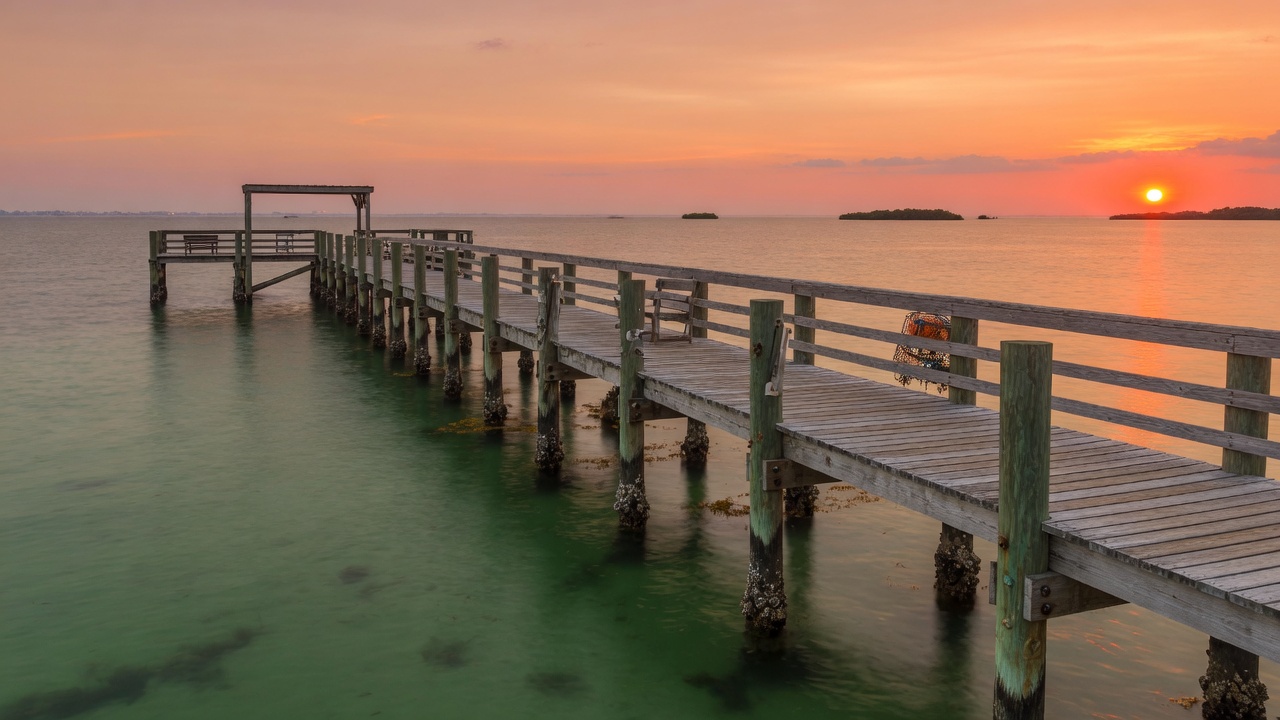
Pensacola is the oldest city on this part of the Panhandle, and it wears its history in the open. It is a Navy town wrapped around a deep working bay and backed by the open Gulf of Mexico, with white sand barrier islands standing between the two. From Gulf Breeze it is exactly one bridge away, which is why so much of our work carries us across Pensacola Bay and into the city's neighborhoods week after week. Spend enough years fencing yards here and you get to know the place by its landmarks.
This guide covers the stops we tell people not to miss, from one of the largest aviation museums in the world to a coastal fort that has stood against the weather for generations. Each section explains what the place is, where it sits in and around Pensacola, and why locals and visitors keep coming back. Everything here is drawn from the places themselves, so you can treat it as an honest introduction to the city on the far side of the bay.
You will notice a theme running through all of it. Nearly every landmark in Pensacola is defined in some way by the water, whether it is the bay the Navy chose for its depth, the barrier islands that take the brunt of the Gulf, or the salt air that touches everything in between. That same water is what shapes our own work here, so this guide reads a little differently than most. It is a fence company's tour of a coastal city, written by people who have spent years learning what this coast does to anything left standing in the open.
National Naval Aviation Museum
The National Naval Aviation Museum sits on board Naval Air Station Pensacola and ranks among the largest aviation museums in the world, with more than 150 restored aircraft on display. Its halls trace the whole history of naval flight, from early wood and canvas seaplanes to Cold War jets and the aircraft flown by the Blue Angels, and admission is free. A soaring atrium hung with suspended aircraft is the centerpiece, and the collection is deep enough that a first visit rarely covers all of it.
For a lot of families in the area it is the first place they take out of town guests, and it never seems to get old no matter how many times you walk the floor. Because it sits on an active naval air station southwest of downtown, visitors reach it through the base, so it pays to check current access rules before you go. From a builder's point of view, a place that free and that heavily visited is a reminder of the sheer amount of perimeter and access fencing a secure installation needs, quiet infrastructure most people never notice but that keeps a working base and a public museum operating side by side. It is the flagship of Pensacola's Navy identity, and it earns the title.
Naval Air Station Pensacola
Naval Air Station Pensacola is the Navy installation on the bay that gave the city its nickname, the Cradle of Naval Aviation. It is where naval aviators have trained for generations, and it is the home base of the Blue Angels, the flight demonstration squadron whose practice runs turn the whole sky over the coast into a show on the right afternoon. On a good day you can hear them from Gulf Breeze, across the bay, long before you see them.
The base has anchored Pensacola's identity and its economy for well over a century, and you feel its presence in every neighborhood we work. It is home not only to the aviation museum but to the historic Pensacola Lighthouse and Fort Barrancas nearby, so the installation is a genuine destination and not just a workplace. It is also a working military base, which means access is controlled and subject to current security rules, so anyone planning a visit should confirm what is open and how to get in before making the drive.
For us it is a constant reminder that this is a Navy town first. A huge share of the property here, from base housing to the older neighborhoods that grew up around the gates, has always needed to be fenced, secured, and maintained against the same salt air we fight everywhere else on this coast. Generations of Navy families have rotated through Pensacola, buying and renting homes across the bay in Gulf Breeze and out toward the beach, and that steady rhythm is part of what has kept this a place where good, durable fence work matters. When we set posts in one of these neighborhoods, we are often working on a home that has passed through several owners tied to that base, each of whom wanted the same thing: a fence that holds up to the coast and does not become the next owner's problem.
Fort Pickens
Fort Pickens is a 19th century masonry coastal fort on the western tip of Santa Rosa Island, now part of the Gulf Islands National Seashore. Built from millions of bricks to guard the entrance to Pensacola Bay, its thick walls have weathered storms, salt, and nearly two centuries of Gulf weather, and it once held the Apache leader Geronimo as a prisoner, a piece of history that still draws visitors out to the end of the island. The drive to reach it runs along a narrow stretch of protected national seashore, with the Gulf on one side and the sound on the other, and the fort itself sits surrounded by beach, dune, and open water.
We are partial to it for obvious reasons. Fort Pickens is one long lesson in building something on this coast that is meant to outlast the weather, which is the same problem we solve on a much smaller scale every single day. The masons who built it understood that salt air and storm surge punish anything left standing near the water, and the fort is still here because they built for the conditions rather than against them. Every time we spec a coated fastener or a deeper footing for a job near the water, we are working from the same idea the builders of Fort Pickens started with. It is history you can walk through, and quietly, it is a builder's field guide too.
Pensacola Beach
Pensacola Beach sits on Santa Rosa Island, across the sound from Gulf Breeze, reached over the Bob Sikes Bridge, and it is where half the county heads on a hot Saturday. Its famous white quartz sand, some of the finest and brightest anywhere on the Gulf, and its public shoreline draw a steady stream of visitors, and the beachfront community has its own easy, laid back rhythm of shops, restaurants, and open water. It shares the barrier island with the national seashore, so wild, undeveloped stretches sit right alongside the busier beachfront.
The island is also a plain reminder of how exposed a build can be out here. On a barrier island there is nothing between the wind off the open Gulf and everything behind it except what you put in its way, which is exactly the job a fence does when it is built right. Wind, blowing sand, and constant salt all work on anything standing near the beach, so builds out here have to be planned for the conditions or they do not last a season. The homes and rentals lining the beach face the harshest version of the coastal weather we deal with anywhere in our service area, and the difference between a fence that survives it and one that fails shows up fast. Every trip across the bridge to the beach is a working reminder of why we build the way we do, and of what happens to the work that cuts corners on this coast.
Pensacola Bay
Pensacola Bay is the deep, sheltered water the city is built around, opening to the Gulf of Mexico past the barrier islands that guard it. It is one of the deepest natural harbors on the Gulf Coast, which is a large part of why the Navy settled here in the first place, and it still shapes the city's waterfront, its port, and the long bridge that carries US-98 between Pensacola and Gulf Breeze. From the water, the city and the peninsula read as two shores of a single bay, which is roughly how we think of our own service area.
A lot of the properties we fence sit within sight, or at least within reach, of that bay, and the salt carried on the breeze off the water is exactly why we spec coated hardware and marine grade fasteners on coastal jobs. Standard galvanized parts that would last for years inland can corrode fast this close to salt water, and the bay is a daily reminder of the difference. It is the geographic heart of everything we do, the water our crews cross every morning and the reason our two location pages sit on opposite shores of the same coast. If you are working from the city side, it is worth crossing back over to see the things to do in Gulf Breeze on the far shore.
Gulf of Mexico
Past the bay and the barrier islands is the Gulf of Mexico itself, the open water that gives this whole coast its white sand beaches, its warm summers, and its hurricanes. It is the largest gulf in the world, and everything about how this region lives and builds traces back to it, from the tourism that fills Pensacola Beach in July to the storms that shape the building codes. You do not have to stand on the shore to feel its influence, because the Gulf sets the weather, the salt, and the seasons for everyone living behind the islands.
For us the Gulf is the reason local experience actually matters. The wind ratings on our fences, the depth of our footings, and the reason a shortcut never lasts a full season all come back to the open water sitting a few miles off. It is the best and the hardest thing about living on this coast at once, the same water that draws people here and the same water that punishes anything built carelessly against it. A crew that has spent years building on the Gulf Coast learns to respect it, and that respect is the whole difference between a fence that stands and one that leans a year later.
Planning Your Visit
The stops above sort into a few natural groupings. The National Naval Aviation Museum and Naval Air Station Pensacola sit together southwest of downtown on the same active base, so a museum trip and the wider naval story pair naturally, keeping in mind that access to the base is controlled and worth checking in advance. Out on Santa Rosa Island, Pensacola Beach and Fort Pickens share the barrier island reached from Gulf Breeze over the Bob Sikes Bridge, an easy pairing of open beach and coastal history. Framing all of it is the water itself: Pensacola Bay separates the city from Gulf Breeze and is crossed by the Pensacola Bay Bridge on US-98, while the open Gulf of Mexico lies beyond the barrier islands and sets the weather for the whole coast.
One honest note, since a fence company is the one telling you about the city. The same bay, beaches, and neighborhoods in this guide are the ground we work every week, from the salt exposed lots near the water to the streets well back from the shore. We are a fence company in Pensacola, FL, and the salt air off the bay is the same air we build against on every coastal job, which is why our approach starts with the conditions rather than the lowest price. If you have a property here and you are thinking about a fence, tell us about your project and we will walk the ground with you and give you an honest number.